AppSky
What is télégestion, and why does French home care need it? Electronic visit verification and contrôle d'effectivité
What télégestion is, how contrôle d'effectivité works, the six-month reference period set by the 2024 decree, how it ties to APA funding, and why paper timesheets no longer pass the check.
Written by
Read time
7 min read
Posted on
July 14, 2026
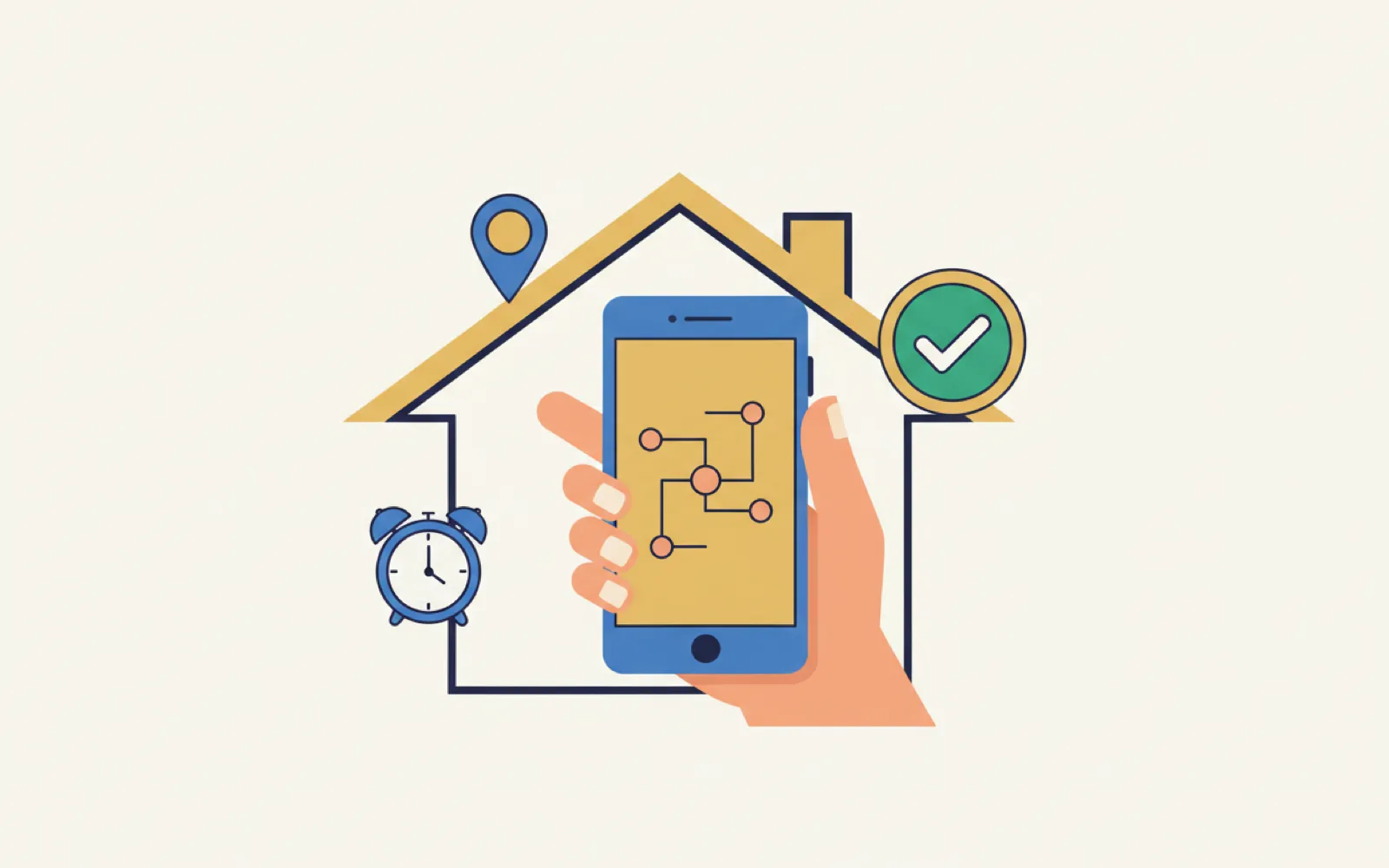
Table of contents
- What is télégestion?
- How does contrôle d’effectivité work?
- The six-month reference period
- Why can’t paper timesheets do this?
- Where télégestion breaks in practice
- Frequently asked questions
- What is télégestion?
- What is contrôle d’effectivité?
- Do we need software to run télégestion?
- How does télégestion tie to APA funding?
- When the check runs, the three numbers have to match
Télégestion is the electronic time-stamping of each home visit: the intervenant checks in and out at the beneficiary’s home, usually by phone, badge or app, and the system builds a dated, timed record of the hours actually delivered. In French home care that record isn’t a nice-to-have. It’s the evidence a département reads to confirm the APA hours it funds really happened before it pays. If you run or build software for a service à domicile, télégestion and the contrôle d’effectivité it feeds are core to whether you get paid.
This guide takes the operator’s view: what télégestion is, how contrôle d’effectivité works, the reference-period rule the 2024 decree set, how it ties back to APA funding, and why a paper timesheet no longer clears the check. It’s a deep read on one piece of the wider assessment-and-funding system covered in our pillar on AGGIR, GIR and APA. Dates and figures here are “true when checked”, not settled.
What is télégestion?
Télégestion is the electronic recording of when a home visit starts and ends. The intervenant identifies the visit at the beneficiary’s home, at the start and again at the end, and the system logs the two timestamps against the right beneficiary and the right task. The methods vary: a call from the beneficiary’s landline to a free number, an NFC badge tapped on a tag in the home, or a check-in from a mobile app with location. Whatever the method, the output is the same: a dated, timed log of hours actually delivered, per visit, per person.
That log does two jobs. Day to day, it tells a coordinator whether the planned intervention happened, ran short, or was missed. Month to month, it becomes the raw material for billing and, more importantly here, for proving to the funder that the hours were real.
How does contrôle d’effectivité work?
Contrôle d’effectivité is how the département checks that the APA plan d’aide hours it funds were actually delivered before it settles up. The APA à domicile pays a personalised plan d’aide up to a monthly ceiling set by the beneficiary’s GIR group (see the APA à domicile spoke for the benefit side). The département isn’t paying for a plan on paper; it’s paying for hours that took place. Effectivité is the mechanism that confirms they did.
In practice that means the service produces its télégestion records for a given period and the département compares delivered hours against the funded plan. Where hours in the plan can’t be shown as delivered, they can be treated as unrealised: recovered if already paid, or withheld if not. This is why the log has to be trustworthy and complete, not reconstructed after the fact.
The six-month reference period
The rule that pins this down is recent. The décret n° 2024-395 du 29 avril 2024, taken in application of article 69 of the LFSS 2023, set the framework for contrôle d’effectivité and fixed the reference period at no less than six months (the text is on legifrance.gouv.fr). In plain terms, the effectivité check looks across a running window of at least six months of delivered hours, not a single week or a spot check. Your system has to hold and export that history cleanly. The CNSA publishes guidance for départements on how the control is run, and the general benefit context sits on pour-les-personnes-agees.gouv.fr.
Because this is a running window measured in months, an occasional missed check-in isn’t just a gap in one day’s record. It compounds across the period the funder reads.
Why can’t paper timesheets do this?
Because the control expects an electronic, dated and timed record you can produce across a six-month window, and a paper timesheet isn’t that. A signed sheet says a visit was planned and someone wrote a time in a box. It doesn’t carry a tamper-evident timestamp per visit, it doesn’t reconcile automatically against the plan d’aide, and it can’t be exported as a clean six-month history when the département asks. That’s the practical reason télégestion is software, not stationery: you literally need a system to capture the check-ins and produce the effectivité reporting the control reads.
This obligation doesn’t stand alone. It’s one of several digital requirements tightening around French home care at the same time, alongside the Ségur-referenced DUI (the electronic resident record that has to handle the INS, MSSanté and the Mon espace santé feed). Our ESMS numérique and Ségur spoke covers that side. The direction across all of it is the same: from paper and incentive toward electronic and obligation.
Where télégestion breaks in practice
The recording itself is rarely the hard part. The trouble shows up at the seams. A télégestion log that lives in one tool, a plan d’aide that lives in a second, and a billing export that lives in a third means someone spends real time each month making three systems agree. When the département runs an effectivité control, any mismatch between what was planned, what the log shows, and what was billed is exactly what gets flagged.
The cleaner arrangement is for the télégestion log, the plan d’aide and the billing export to sit in one record. Then the delivered hours a coordinator sees, the hours the effectivité report shows, and the hours you invoice are the same numbers by construction, not three exports someone has to reconcile by hand.
Frequently asked questions
What is télégestion?
Télégestion is the electronic time-stamping of each home visit. The intervenant checks in and out at the beneficiary’s home, usually by phone, badge or app, and the system records a dated, timed log of the hours actually delivered. That log is what the département reads to confirm APA-funded hours took place before it pays.
What is contrôle d’effectivité?
Contrôle d’effectivité is how the département verifies that the APA plan d’aide hours it funds were actually delivered. Under the 29 April 2024 decree, the reference period it checks is no less than six months. The télégestion log is the evidence; without it, hours can be treated as unrealised and recovered or left unpaid.
Do we need software to run télégestion?
In practice, yes. Paper timesheets don’t satisfy contrôle d’effectivité, which expects a dated, timed electronic record you can produce over a six-month period on request. Télégestion means an app, badge or phone-based check-in feeding a system that stores and exports those visit records. It works best when that log shares one record with the plan d’aide and the billing export.
How does télégestion tie to APA funding?
APA à domicile funds a plan d’aide up to a monthly ceiling set by the GIR group. The département pays for hours that were actually delivered, and télégestion produces the effectivité evidence for that. If the delivered hours can’t be shown over the reference period, the corresponding funding can be recovered or withheld.
When the check runs, the three numbers have to match
Télégestion turns a home visit into a dated, timed record, and contrôle d’effectivité turns that record into whether the département pays. The rule set by the 29 April 2024 decree, a reference period of at least six months, means your system has to hold clean visit history and export it on demand. Off-the-shelf packages handle the recording; where they tend to lag is keeping the log, the plan d’aide and the billing export in step. Building Domihome, the detail that surprised me most was how much of a coordinator’s week went into making those three tell the same story, which is why we designed them to share one record rather than three. I’m a nurse by training, so this is the operational grief I wanted gone. See what we did for Domihome, or book an intro call.
This guide is informational and not billing, legal or medical advice. France’s autonomy rules and its digital-health obligations are evolving, and the contrôle d’effectivité framework set in 2024 is still bedding in across départements. Confirm current rules and the reference period with the official sources, including legifrance.gouv.fr for the décret n° 2024-395 du 29 avril 2024 and article 69 of the LFSS 2023, the CNSA, and pour-les-personnes-agees.gouv.fr. Last verified 14 July 2026.