AppSky
MyCareNet explained: insurability, eFact and eAttest
What MyCareNet is and how home nurses use it: insurability checks, eFact third-party-payer billing versus eAttest, and what Belgian home-care software has to integrate.
Written by
Read time
8 min read
Posted on
July 14, 2026
Table of contents
- What is MyCareNet, and who runs it?
- What does MyCareNet do for a home-nursing service?
- eFact and eAttest: which one is home nursing on?
- What sits underneath: the eHealth platform, eHealthBox and identity
- What your software actually has to integrate
- A worked example: one home visit, end to end
- Frequently asked questions
- What is MyCareNet used for in home nursing?
- Do home nurses use eAttest or eFact?
- Does our home-care software have to integrate MyCareNet?
- How is MyCareNet related to the eHealth platform and BelRAI?
- MyCareNet is where a home-care product either works or doesn’t
MyCareNet is the central service platform through which Belgian care providers exchange information electronically with the mutualités — the health insurance funds — for insurability checks, electronic billing and medico-administrative documents, running on the federal eHealth platform. It is a joint initiative of the Collège Intermutualiste National (the umbrella of the mutualités), the eHealth platform and RIZIV/INAMI. If you build or run software for home nursing in Belgium, MyCareNet is the pipe your billing flows through: get it wrong and your users cannot get paid.
This guide gives the operator’s and builder’s view: what MyCareNet actually does, how insurability, eFact billing and eAttest fit together, what sits underneath on the eHealth platform, and what your software has to integrate. It is the billing-and-insurability sibling to the assessment side of the same plumbing — same foundation, different data.
What is MyCareNet, and who runs it?
MyCareNet is a central, service-oriented platform for exchanging information between care providers — individual professionals and institutions — and the mutualités, in a way RIZIV/INAMI describes as simple, reliable and secure. It is not a single mutualité’s system: it is run jointly by the Collège Intermutualiste National (CIN), the eHealth platform and RIZIV/INAMI, precisely so that one connection reaches all the funds at once.
The point is to replace paper and per-fund idiosyncrasy with one electronic channel. Instead of posting a paper attestation to each patient’s fund and waiting, a home-nursing service checks entitlement, sends its invoices and transmits its administrative documents through MyCareNet — and reaches every mutualité the same way.
What does MyCareNet do for a home-nursing service?
For home nurses specifically, RIZIV/INAMI groups the MyCareNet services into three jobs.
- Insurability. You can check, electronically and every month, whether your patients are insured with a Belgian mutualité and what they are entitled to. This is the “assurabilité” lookup, and it is the first thing you want before you deliver billable care, because it tells you whether the fund will pay.
- Electronic invoicing (eFact). When you apply the third-party-payer scheme — where the fund pays you directly rather than the patient paying and claiming back — you must send your invoicing electronically through MyCareNet, using the eFact service.
- Medico-administrative documents. The same channel carries the paperwork of home nursing: toilet (hygiene-care) notifications and forfait requests, notifications for palliative patients, notifications for specific technical procedures, and notifications for complex wound care.
That last category is where MyCareNet stops being “just billing” and becomes the operating rail for the whole care-authorisation workflow.
eFact and eAttest: which one is home nursing on?
This is the distinction that trips people up, so it is worth stating precisely. MyCareNet has two electronic-attestation-style services, and they are for different payment situations.
eAttest is for cash-payment care — where the patient pays the provider and then claims reimbursement from their mutualité. It is the electronic replacement for the paper attestation of care given, and RIZIV/INAMI lists its eligible providers as general practitioners, specialists, dentists and physiotherapists. Home nurses are not on that list.
eFact is for the third-party-payer scheme — where the mutualité pays the provider directly. This is the normal situation in home nursing: a service delivers care, applies third-party payer, and invoices the fund. When you do that, the invoicing goes electronically through eFact, and the paper attestation of care given is no longer sent.
So, in one line: doctors and dentists doing cash-payment care reach for eAttest; a home-nursing service billing the fund under third-party payer is on eFact. If you are building for home care, eFact is the service that matters, and “what gets billed” — which nomenclature acts and which Katz-based A/B/C forfaits — is decided upstream by the rules, then transmitted here.
What sits underneath: the eHealth platform, eHealthBox and identity
MyCareNet does not stand alone. It runs on the federal eHealth platform, the shared infrastructure that gives Belgian healthcare its secure identity, authentication and messaging layer. Three pieces of that foundation matter for a home-care product.
First, identity and authentication: the platform is what lets a piece of software prove, securely, that it is acting for a real, authorised care provider before any fund data is exchanged.
Second, the eHealthBox: a secure electronic mailbox built specifically for care providers and institutions, for exchanging confidential medical and administrative data between actors in Belgian healthcare. It is available both as a web application and as a web service your software can call.
Third — and this is the connection back to assessment — the same eHealth platform carries BelRAI. The BelRAI web services for system-to-system exchange are part of the federal eHealth action plan, which means the assessment data your software produces and the insurability-and-billing data it exchanges travel over one shared foundation. That is the whole argument for treating “the plumbing” as a single integration problem rather than three unrelated ones: insurability, billing and assessment all reach the outside world through the eHealth platform.
What your software actually has to integrate
Put the operator’s hat on, then the builder’s. For a home-nursing organisation, the consequence is that billing stops being a spreadsheet you export and becomes a live conversation with every mutualité, mediated by MyCareNet. For the software, that means a concrete integration list:
- eHealth identity and connectivity — the authenticated channel to the platform, without which nothing else works.
- Insurability — the monthly entitlement check, ideally run before care is scheduled, not after it is delivered.
- eFact — third-party-payer invoicing to the mutualités, including handling the responses: acceptances, rejections and the corrections that follow.
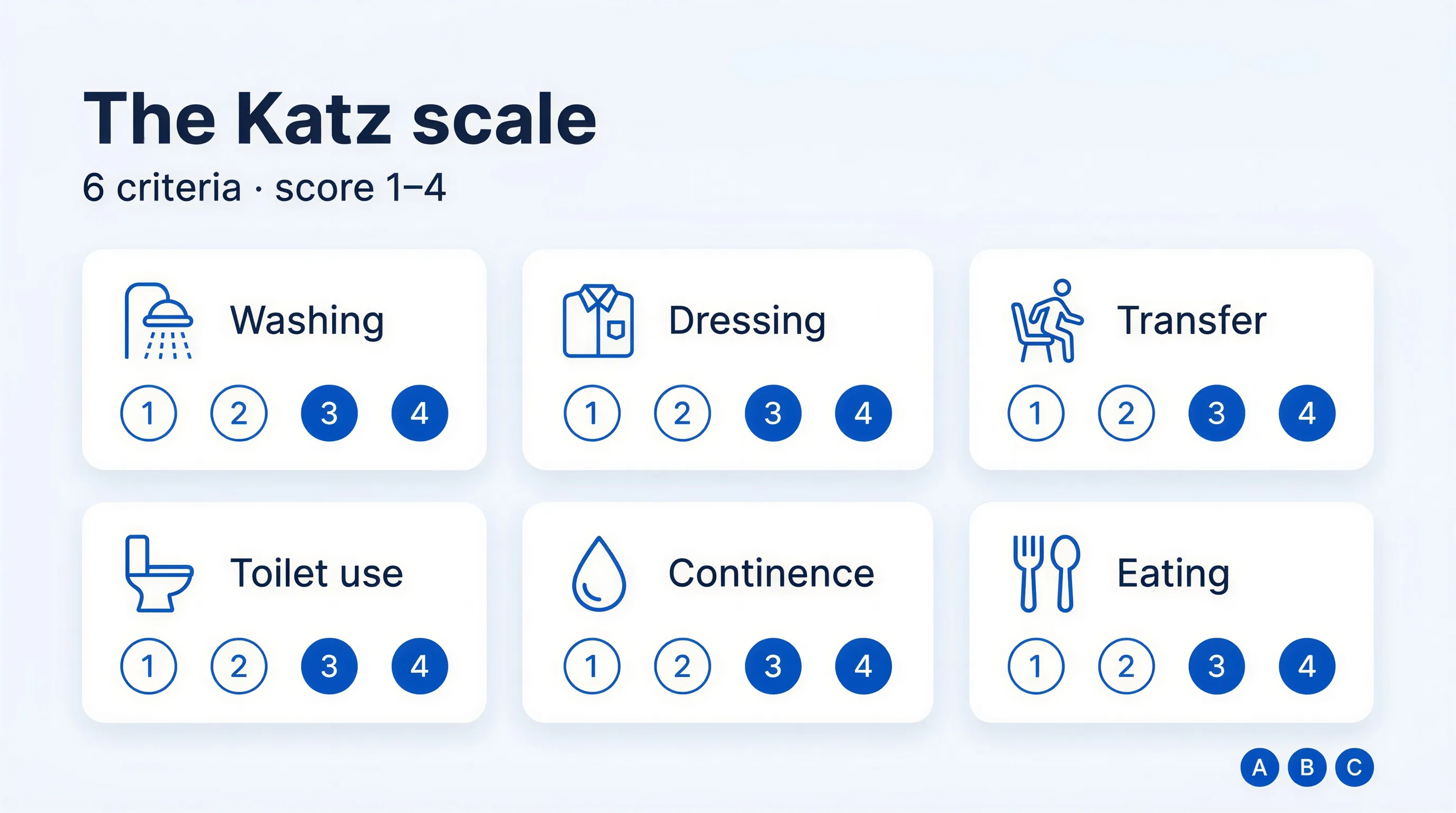
- Medico-administrative documents — the notifications and forfait requests that authorise the care in the first place, including the Katz evaluation scale, which the nurse sends to the fund’s médecin-conseil through MyCareNet.
The part that is easy to underestimate is the second half of eFact: not sending the invoice, but reconciling what comes back. A rejected line is unpaid care, and the difference between a good product and a painful one is whether the rejection lands in front of the right person with enough context to fix it, or disappears into a log.
A worked example: one home visit, end to end
Take a home-nursing service and a new patient. Before the first billable visit, the service runs the insurability check through MyCareNet and confirms the patient is insured with a Belgian mutualité and entitled to reimbursed nursing care. The nurse assesses care-dependence with the Katz scale and, because the profile warrants a forfait, sends the evaluation scale to the fund’s médecin-conseil through MyCareNet as one of the medico-administrative documents — the authorisation step.
Care is then delivered under the third-party-payer scheme, so the patient pays nothing at the door. At the billing cycle, the service invoices the mutualité electronically through eFact for the care given. The fund processes the electronic invoice and pays the service directly. No paper attestation of care given changes hands, and no eAttest is involved — that service belongs to cash-payment care by doctors and dentists, not to a home-nursing service on third-party payer. One patient, one channel, three touches: insurability, authorisation, invoice.
Frequently asked questions
What is MyCareNet used for in home nursing?
MyCareNet is the electronic network home nurses use to exchange information with the mutualités. In practice that means three things: checking a patient’s insurability, sending electronic invoices under the third-party-payer scheme (eFact), and transmitting medico-administrative documents such as toilet notifications and forfait requests. It runs on the federal eHealth platform.
Do home nurses use eAttest or eFact?
eFact. eAttest is the electronic-attestation service for cash-payment care (patient pays, then claims reimbursement) and is used by doctors, dentists and physiotherapists, not by home nurses. Home nurses billing under the third-party-payer scheme send their invoicing electronically through eFact instead.
Does our home-care software have to integrate MyCareNet?
For any product that bills Belgian home nursing, effectively yes. Electronic invoicing to the mutualités goes through MyCareNet, and insurability checks and the medico-administrative documents run on the same rails. A product that cannot reach MyCareNet cannot close the billing loop for its users.
How is MyCareNet related to the eHealth platform and BelRAI?
MyCareNet is a central service platform that sits on the federal eHealth platform, which also provides the secure identity, the eHealthBox mailbox and the web services other health data travels on. BelRAI assessment data moves over those same eHealth web services, so the insurability-and-billing rails and the assessment rails share one foundation.
MyCareNet is where a home-care product either works or doesn’t
Insurability, eFact billing and the medico-administrative documents are not features you bolt on at the end — they are the reason a home-nursing team can get paid, and they set the shape of the whole product. AppSky builds software for home-nursing and home-care teams, where assessment, care planning and MyCareNet billing sit in one flow. Wiring eFact for these teams, the detail that surprised us most was how much value sits in the return path: making a rejected invoice line show up as a task with the patient, the act and the reason attached, rather than a code buried in a batch file, is what turns MyCareNet from a black box into something a coordinator can actually run. See what we did for Domihome, or book an intro call.
This guide is informational and not billing, legal or medical advice. MyCareNet services and the eHealth platform evolve: confirm current rules with the official sources, including the RIZIV/INAMI overview of MyCareNet, the MyCareNet page for home nurses, the eAttest page, and the eHealthBox service page. Last verified 14 July 2026.